Showing posts with label History. Show all posts

Friday, April 7, 2017

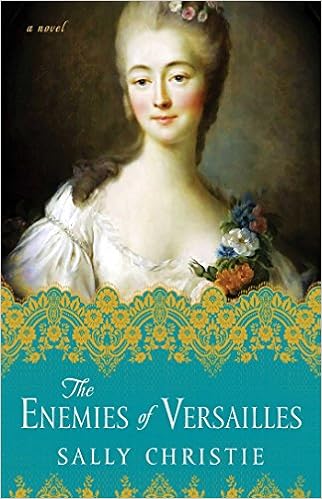
Review: "Enemies of Versailles" by Sally Christie

Long time, no see folks! I thought it was worth coming out of hibernation to review the final installment Sally Christie’s Versailles Trilogy. Enemies of Versailles focuses on the last of Louis XV’s mistresses, Jeanne de Becu, Comtesse du Barry. Jeanne often gets a bad rap in history as she was a courtesan before becoming Louis’ Maitress en Titre. She was frequently called a whore and was considered grasping and flashy.

Enemies features Christie’s compelling and refreshingly humorous voice. I will admit that this last installment is not quite as compelling as the two previous entries. I believe this is because the novel is comprised only of Jeanne’s point of view as well as Madame Adelaide, Louis’ oldest surviving daughter. Nonetheless, it is still an enjoyable read.
Christie’s portrayal of Jeanne is much more forgiving, which is what makes her such a wonderful author. It is hard to make a reviled character likeable, yet it is easy to warm up to Jeanne. She was simple person who enjoyed the finer things in life. She rarely engages in politics.

The same cannot be said of Madame Adelaide. Nothing is likeable about her character, although her ability to remain completely blinkered to the outside world is amusing at times. She does undergo a bit of a redemption towards the end of the book as she realizes that infallibility and royalty are not the same thing.


History tells us that Jeanne de Becu did not have an easy end. While Louis XV’s remaining daughters escaped France at the beginning of the Revolution, Jeanne was not so lucky, and unfortunately we are with her right up to the very end. Her death was an unfortunate consequence of the overzealous Revolutionaries.

Enemies of Versailles is a fitting capstone on this excellent trilogy. Christie’s wit is fully on display while still capturing the upheaval of the last years of the Ancient Regime. I’ve read that Christie is hard at work on a new novel; I, for one, cannot wait to see the finished product! 

Friday, August 31, 2012

Back in the Saddle

I am happy to report that I got through my malaise and started writing again. "A Convenient Misfortune" started calling out to me and so I gave in. For those of you keeping score, it is my American Revolution novel set in Charleston, South Carolina.

I was very lucky to attend college in Charleston and those formative years were great for writing. I often would spend Sunday afternoons riding past two hundred year old houses, getting inspired, and writing in my head.

Charleston is a lovely city--you must visit if you ever have the chance. I highly recommend going in the off season though; it can be a zoo during the warmer months. And the weather is not that great--it's a giant walk-in sauna. It's a very European city; I'd say that it is one of the most European in the US (next to New Orleans). Settled in late 1600s, Charles Town was named for King Charles II. As a royal colony, it had "Lords Proprietors" who managed it. Vast plantations were established outside of the original walled city and many grew rich as a result. Settlers came from the West Indies to further build their fortunes, while French Hugenots fled France and found religious refuge in the colony.

With such illustrious connections to Britain, you can imagine the divide that occurred during the American Revolution. Many of Charles Town's most prominent citizens sided with their mother country, but a good portion also became Patriots. Arthur Middleton, the vastly wealthy owner of Middleton Place plantation signed the Declaration of Independence, while prominent attorney John Rutledge and his brother Edward (who signed the Declaration as well) attended the Continental Congresses.

For all intents and purposes, the war wasn't visited upon the residents of Charles Town until 1780 when the British invaded and occupied the city. General Henry Clinton took up residence at Drayton Hall and quickly set to work rounding up those Patriots who were considered difficult. Arthur Middleton and Edward Rutledge were exiled to a prison ship in St. Augustine, Florida, while Issac Hayne, leader of a rebel brigade, was executed for violating the terms of his earlier parole.

Such a rich history is a boon to any novel and I'm lucky to be intimately acquainted with it. "A Convenient Misfortune" opens in April 1775. The heroine, Arabella Westbury, arrives in Charles Town alone. Her father was appointed as the assistant minister to St. Michael's Church, but unfortunately he dies on the voyage. Now an orphan, Arabella must make her way in the world on her own. She finds it difficult to live in a society with divided loyalties, but she eventually secures a position as a governess to Marianne Bennett, the youngest sister of one of Charles Town's most eligible bachelors. Murder and mayhem follow. Just kidding. High drama and hijinks ensue. Yes, that's better.

"A Covenient Misfortune" is long overdue to be finished. I started working on it during my senior year in high school and then throughout my college years. I've taken turns at revising and re-writing it in between working on "Rebel Heart" but this is the first time that I have focused entirely on it. I've actually started re-writing it completely. It has a good, finished (mostly) story line, but my writing style has changed over the years. So I just decided to start from the top and see where it takes me.

I'm looking forward to sharing more with you as the time passes. There is more information about this novel under the "Works in Progress" tab.

Tuesday, August 28, 2012

Success By Any Other Name....

Well the results are in and I am pleased as punch to say that during the free promo this weekend, 1917 copies of "Rebel Heart" were downloaded. Yes, I will admit that I calculated all the money that I technically "lost" by making the book free, but at the end of the day, I'm still thrilled by the idea that 1917 people have my book in their hands. If you were one of those people, I would like to extend a heartfelt thank you for your support. Please (don't make me beg) take a few minutes to review the book on Amazon or Goodreads once you have finished it. Despite author meltdowns and sock-puppets, I still believe a review counts for a lot. Plus I would like to know my reading public's thoughts. There's always room for improvement (unless of course you thought it was perfect...definitely feel free to share that!)

With what I think was a fairly successful launch behind me, I cracked open "Rebellion" to see where I stood. I don't know if it is the bad mood I've been in or what, but I was very disenchanted with the whole thing. I hate when that happens! Nothing seemed to read correctly or the characters annoyed me or something was just.not.right. And even though I started plotting out a potential sequel to 'Rebel Heart' yesterday, I'm not feeling completely sold on going in that direction either.


This could easily be a photo of me. I was blond as a kid
and often prone to pensive stare-offs

So what do I do? Do I take a few days to ponder something wholly new? There's always a late Victorian novel or even though "Rebel Heart" didn't find a home in the English Civil War, it's still a good time period. I still have a Revolutionary War novel that is in various stages of completion.
What do you do when nothing seems write right?

Friday, May 18, 2012

Beauties of the Stuart Era, Part Deux


Ok, I'm wrapping up the week not only with the final post on my series of very cool portraits of long dead folks, but also with a trip to Charleston for some much needed relaxation.

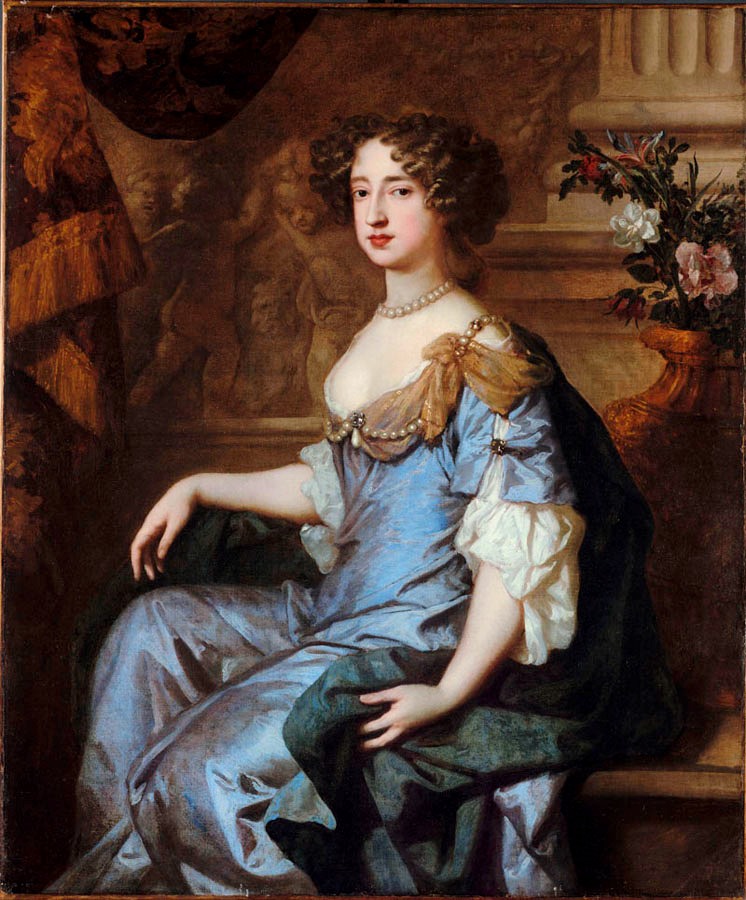
File:Queen Mary II.jpgSir Godfrey Kneller painted the "Hampton Court Beauties" as a commsion for Queen Mary II. For those of you who don't know the ins and outs of the British monarchy, Mary came to the throne jointly, with her husband William of Orange, as a compromise of sorts. For those of you stateside, the College of William and Mary was named after these two ruling monarchs.

Mary's father was James II (the younger brother of Charles II), a committed Catholic and well the English weren't so fond of having a Papist for a monarch. James was overthrown following the birth of a son (and heir, technically) in what was termed the "Glorious Revolution" although it was fairly bloodless. Mary's husband William was the son of James's sister (yes, that made them first cousins), so it seemed fair that both he and Mary would rule together. They apparently had a fairly good marriage, no children unfortunately, and when Mary died of small pox at the age of 32, William supposedly said that he was now "the miserablest creature on earth." He continued to rule for another ten years before succombing to pneumonia.

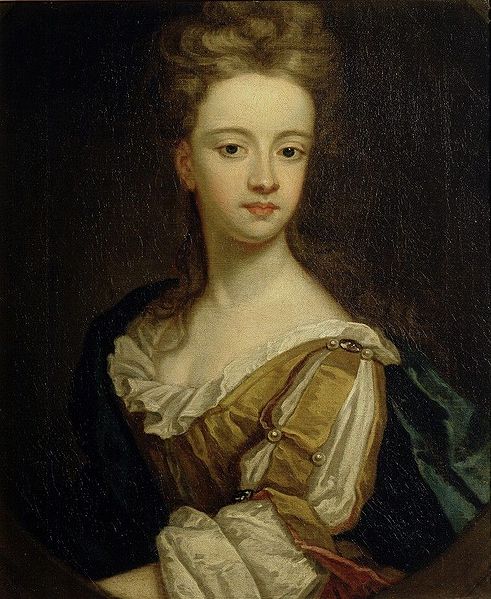
Mary Stuart was quite the beauty in my opinion. I've always fancied her portraits. I suppose it makes sense that she would commission the portraits of some of the most beautiful women in her court, although one of her ladies of the bedchamber cautioned her not to do it. There are eight portraits altogether.


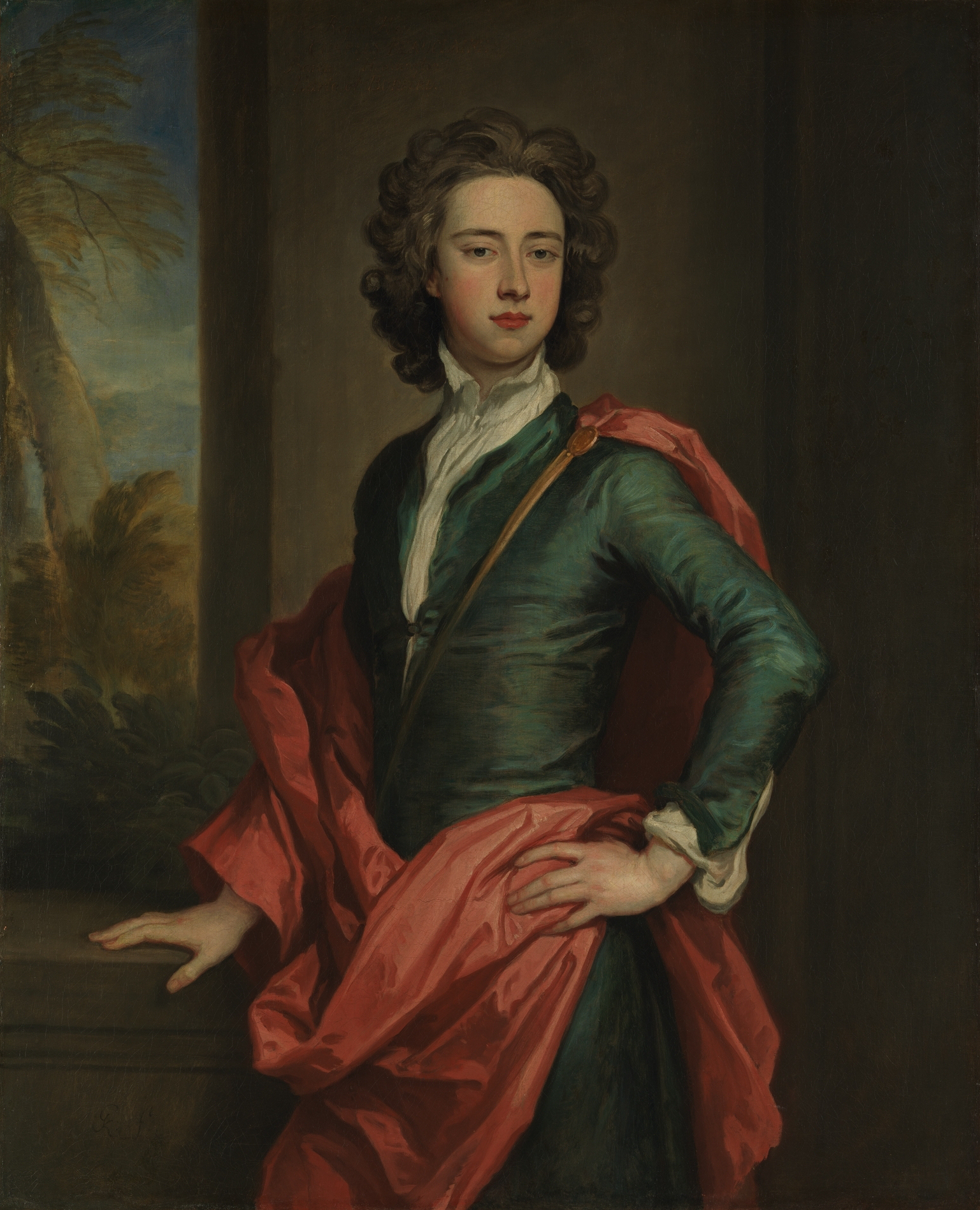
  File:Charles Beauclerk, 1st Duke of St Albans.jpg
Lady Diana de Vere started out life as the daughter of the 20th Earl of Oxford. She married Charles Beauclerk, the 1st Duke of St Albans. Charles was the illegitimate son of Charles II and his mistress by Nell Gywn. He was quite the looker! They had twelve children together and Lady Diana eventually became a lady of the bedchamber to George II's queen consort, Caroline of Ansbach.

Lady Margaret Cecil was first married to Lord Stawell and the later to Richard Jones, the 1st (and last) Earl of Ranelagh.

Carey Fraser started out in Charles II's court, the daughter of one of the king's physicians. She eventually married General Charles Mordaunt, the 3rd Earl of Peterborough.

Portrait of Isabella, Duchess of Grafton (c. 1688-1723) and her son Charles Fitzroy, later 2nd Duke of Grafton (1683-1757), full-length, a landscape beyond        Isabella Fitzroy (née Bennet), Duchess of Grafton, by Pieter Schenck, after  Sir Godfrey Kneller, Bt, circa 1685 - NPG  - © National Portrait Gallery, London
Lady Isabella Bennet was the daughter of an earl and married the Duke of Grafton, who was the illegitimate son of Charles II. How do you like that? This portrait was done by Kneller, but is not apart of the original Hampton Court Beauties series since the duchess's son is pictured as well. The engraving however was done after the original Kneller portrait, so you can get an idea of what it looked like. She was quite attractive, in my opinion!

         
Francis Whitmore was the daughter of Frances Brooke...who was one of the sitters for Lely's "Windsor Beauties" series. Frances married Sir Richard Middleton and became Lady Middleton.

Mary Bentinck, Countess of Essex
Lady Mary was the daughter of the 1st Earl of Portland and eventually became the wife of the 2nd Earl of Essex and later the Rgt. Honorable Conyers Darcy.


Lady Mary Compton married Charles Sackville, the 6th Earl of Dorset. Sadly she died at the young age of 22....but not before having two children, of course!
 

And last but not least is Mary Scrope. She was known as the most beautiful woman at court (I don't see it...) and she married John Pitt.


Happy weekend to you all. Do you have any writing related activities planned? Or are you all just, as I say, chillaxin'?

Wednesday, May 16, 2012

Beauties of the Stuart Era


Like I promised on Monday, I am back with a post regarding Sir Peter Lely's series of painting entitled the "Windsor Beauties" as well as Godfrey Kneller's "Hampton Court Beauties."

Some of these paintings are on display at Hampton Court Palace in England as I write--they are a part of an exhibition called "The Wild, the Beautiful, and the Damned". I really hope that my hubby and I will be able to make it over to see it before it comes off exhibition in September.

Sir Peter Lely's series was commissioned by Anne Hyde, the wife of the future James II, also known as the younger brother of Charles II. I find it interesting that Anne was the money and brains behind this project since she herself was not the most attractive woman at court.


Anne Hyde: it's the eyebrows and the weird curly hairs on her forehead

 
Ten of the sitters are attributed to Anne's original commission. The Countess of Orsory and Madame Henrietta (Charles II's little sister) were later additions to the pool, apparently.

Barbara Villier Palmer, Countess Castlemaine and Duchess of Cleveland

The notorious Barbara Palmer was Charles II's mistress for many, many years, though that is not to say that they remained faithful to each other. Five of her six children were claimed by Charles. He eventually palmed her off by making her a duchess and granting a couple of estates to her. Oh and titles for the kids.
Frances Teresa Stuart, Duchess of Richmond

Frances Stuart also known as "La Belle Stuart." As mentioned in previous posts, Frances refused to
become Charles II's mistress. Instead she eloped with her cousin Charles Stuart, the Duke of Richmond. Confusing right? The King was very displeased and the couple was not allowed back at court for some time. She had a happy marriage by all accounts but unfortunately became a widow several years later when her husband drowned while on a diplomatic mission to Holland.

Jane Needham Middleton
Not a lot is known about Jane. She married Charles Middleton in 1660 and was connected to both the 1st Earl of Rocester and the 1st Duke of Montagu. So I guess you could say that she "got around" although that was more of the rule than the exception for this time period. Interestingly enough, she was known for emanating a peculiar, sour smell. Oh 17th century hygiene!
 
Elizabeth Wriothesley Percy
Elizabeth was the 11th Countess of Northcumberland and chantelaine of Syon House. Her husband was so jealous that he reportedly took her abroad and dumped her in France to keep her from the wiles of Charles II. Interestingly enough, after her first husband's death, she married Ralph Montagu, the 1st Duke of Montagu. I wonder what Jane Middleton thought about that?


Some of the other beauties were:
 

404958
Mary Bagot, Countess of Falmouth and then
Countess of Dorset (lucky her!)
404515
Anne Digby Spencer, Countess of Sunderland

The Countess was no friend to the future Queen Anne. The then Princess dubbed the lady the "greatest jade that ever was". Ouch.
 
Margaret Brooke, Lady Denham
Lady Denham was the mistress of James, Duke of York at one point. Supposedly her husband had her poisoned but a later autopsy revealed this was not the case.

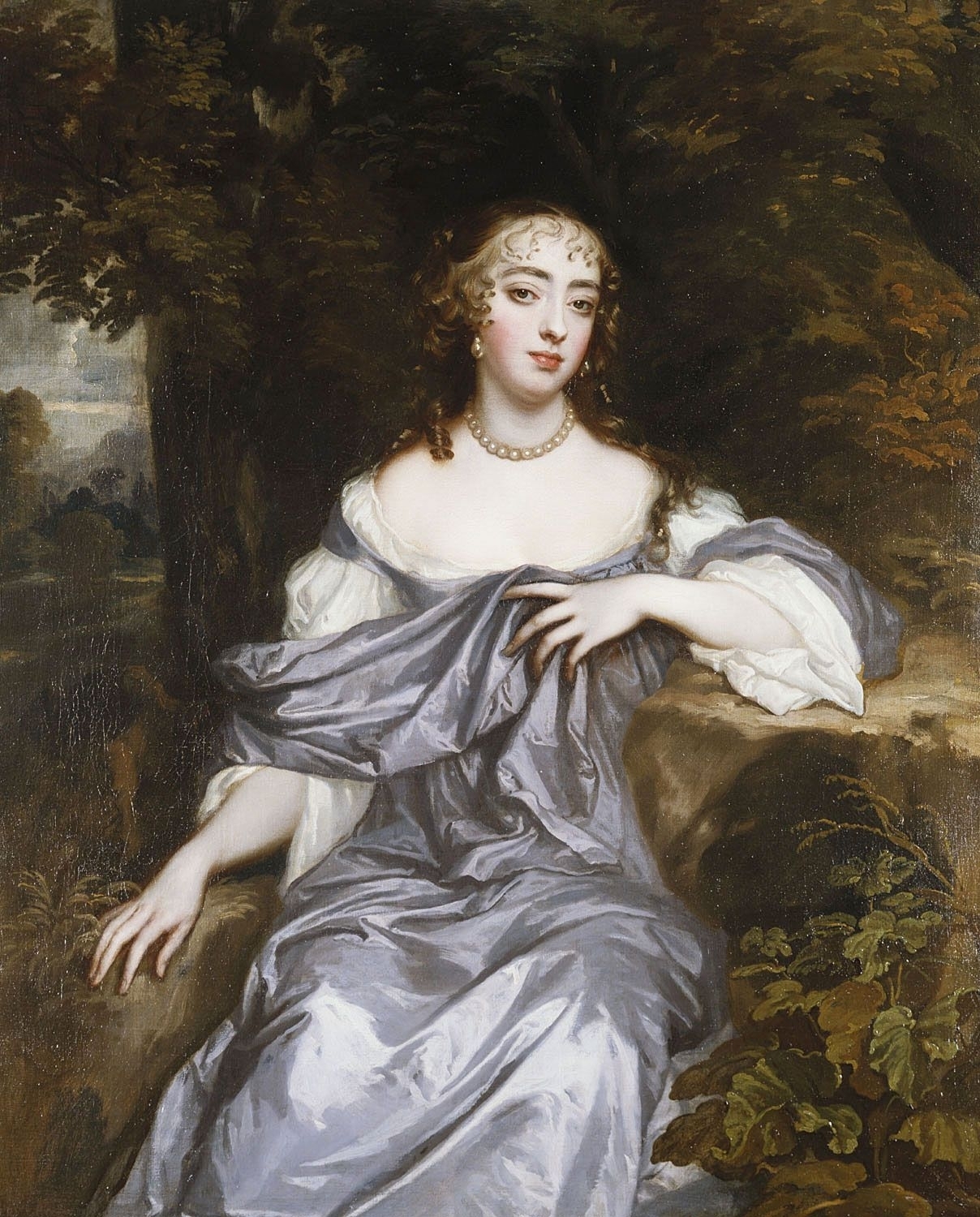
Frances Brooke, Lady Whitmore

Lady Whitmore was the sister of Margaret Brooke, Lady Denham. She learned a lesson from her unfortunate sister, choosing to rusticate in the country instead of involving herself in court intrigues.


Elizabeth Hamilton, Comtesse de Grammont

The Comtesse was known as "La Belle Hamilton" before Frances Stuart became "La Belle Stuart".

 
Henrietta Boyle Hyde, 1st Countess of Rochester


That's everyone for now. I think I will delay the post on Kneller's "Hampton Court Beauties" until later this week, so keep an eye out for that.


Monday, May 14, 2012

A Fascination

I have a confession to make. I love portraits of long dead people. No seriously. When I travel, I can most likely be found in an art museum, looking at their collection of historic portraits. I love looking at the clothing, the faces, everything. I especially love looking when the museum puts a label on the portrait and tells me something about them. Sadly, a lot of them don't do me this favor, but I still enjoy looking nonetheless. I like to think about who the person was, what kind of life they lived, etc. It always provides an absorbing time for me.

Since I've recently developed a fascination for the Stuart time period, I have been spending a lot of time looking at portraits from the era. It started with my aborted idea to write a book about Frances Stuart or as she was known La Belle Stuart. But then I found out that it had been done recently (The Painted Lady -- it was a good book, by the way). It's a very interesting period--some would say that the Stuart era was downright debauched, but that's another conversation for another time.

Two of the celebrated artists from the Stuart age were Anthony Van Dyck and Peter Lely. Both were court painters and as a result, they painted the cream of England's aristocracy. I thought I would share a few:


This lovely lady was Elizabeth, the Countess of Kildare by Peter Lely. My quick Wikipedia search found no entries for her, although she was listed as one of Charles II's mistresses. No surprise there; that man slept with anything that moved. OK, maybe not anything, but anything female most assuredly.


And this of course is Charles I and his queen Henrietta Maria along with the future Charles II (bottom left) and Princess Mary (I'm assuming) by Van Dyck. It never fails to amaze me how these artists were able to capture clothing the way they did. You almost want to reach out and touch the fabric and expect to feel silk or satin.


This is another lovely portrait by Anthony Van Dyck featuring five of Charles I's children. I'm not entirely sure of all of them, but I'm going to take a stab at it and say the future Charles II along with the future James VII, Princess Mary, Princess Elizabeth, and the baby should be Princess Anne (or possibly Prince Henry). I love the dog, by the way. I'm sure my husband would want to acquire him!


And this is Lucy Brydges by Peter Lely. Once again, I couldn't find much about her besides she was the daughter of the Baron of Chandos. If you haven't noticed, Lely liked to accentuate the eyes and lips to the point that he always made his subjects appear sensual. I read recently that pretty much all of his sitters looked like Barbara Castlemaine, who of course was Charles II's long time mistress. I don't find her that attractive, so I guess it's true about her being good in bed.

 
That's all for now. Tune in tomorrow or possibly later this week, I might post some more portraits, particularly Lely's series the "Windsor Beauties" and then Godfrey Kneller's the "Hampton Court Beauties." Until then, what are your fascinations--odd or otherwise?